
“It is a truth universally acknowledged, that a single man in possession of a good fortune, must be in want of a wife.”
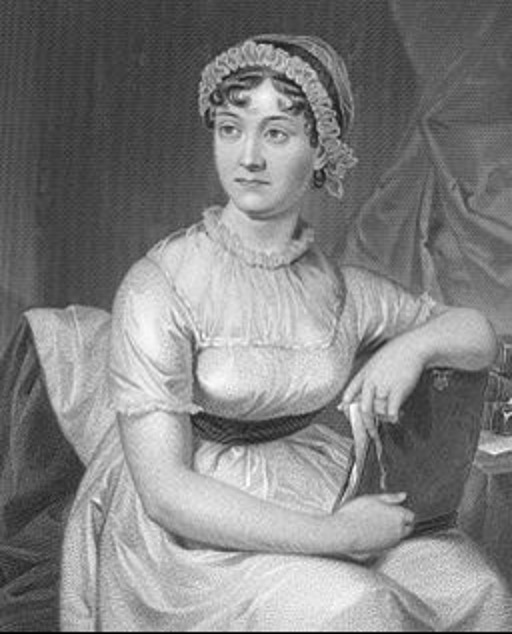
Many people will recognise this as the first line of Jane Austen’s 1813 novel, Pride and Prejudice and to modern eyes it sounds a very old-fashioned idea. Which is not surprising, it was written over two hundred years ago when society was a very different place. Especially for woman.
In 1813 women couldn’t vote, have access to higher education and automatically receive an inheritance if there was a male heir. Even if that male heir wasn’t a child of the deceased. It could be a cousin of the person who has died, as we saw in Pride and Prejudice with Mr Collins. He was the cousin of the five Bennet girls and the house they lived in was entailed to a male heir when their father died. Which would leave the girls and their mother homeless.
In Austen’s day the way to ensure that you would survive would be down to who you married. Her novels aren’t just old fashioned chick lit trying to find ‘The One’, they were also about trying to find a rich, romantic partner. And to be fair, sometimes it was the men who would be looking for a rich heiress to tie the knot with.
The concept that your life, your home, your security, your happiness, was entirely dependent on whom you married feels archaic in the twenty-first century. However, once you look at the current state of wealth distribution in BritainAusten’s humorous line suddenly feels very contemporary.
“Wealth inequality is high and rising and more marked than income inequality. In the UK, the bottom 50% of the population owned less than 5% of wealth in 2021, and the top 10% a staggering 57% (up from 52.5% in 1995). The top 1% alone held 23%” (World Inequality Lab, 2022).
I am currently reading the Lucy Worsley’s book, ‘Jane Austen at Home’ (2017) which the back cover tells us is, “This new telling of the story of Jane’s life shows us how and why she lived as she did, examining the places and spaces that mattered to her” (Hodder & Stoughton, 2017).
Lucy Worsley makes a good case for showing how precarious Austen’s home life was when she, her mother and sister Cassandra, kept having to move house when her father died. They had a very small income and relied on the good humour of her brothers who had either married into money, or in one case Edward, was adopted by a rich, childless couple as a child with Austen’s parents blessing.
 yasminwrites.com